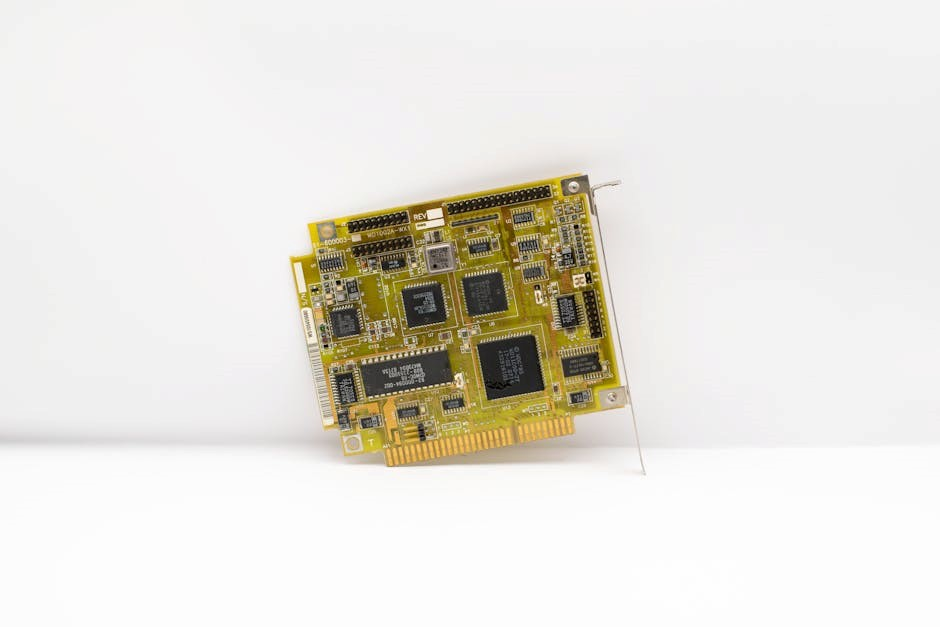
MIL-STD-1553, a crucial standard for aerospace, defines a serial communication protocol. Condor Engineering’s tutorial provides a comprehensive reference for understanding this vital technology.
Historical Context and Evolution
Initially developed in the 1970s, MIL-STD-1553 emerged as a response to the growing complexity of military aircraft systems. Prior to its creation, disparate and often incompatible communication methods hindered integration. The standard, initially designated MIL-STD-1553A and later revised to MIL-STD-1553B, aimed to establish a unified, reliable data bus.
Condor Engineering’s tutorial highlights this evolution, tracing the standard’s journey from its early adoption in fighter aircraft to its widespread use across diverse aerospace and defense applications. Over decades, MIL-STD-1553 has proven remarkably adaptable, continually incorporating advancements in packaging technologies while maintaining its core deterministic principles. This enduring relevance underscores its robust design and the foresight of its original architects.
Importance in Aerospace and Defense Systems
MIL-STD-1553 remains critically important due to its deterministic nature and robustness in harsh environments. As Condor Engineering’s tutorial explains, its reliability is paramount in applications where data integrity is non-negotiable – think flight control, weapons systems, and engine management. The dual redundant physical layers enhance fault tolerance, ensuring continued operation even with component failures.
Its adaptability allows integration with modern technologies, extending its lifespan. Despite the emergence of newer standards, MIL-STD-1553 continues to be the backbone of many existing and evolving systems. This enduring presence signifies its cost-effectiveness and the substantial investment already made in infrastructure and expertise, solidifying its place in aerospace and defense.

Understanding the MIL-STD-1553 Protocol
MIL-STD-1553 utilizes a Manchester code for data and clock transmission on a single wire pair, eliminating DC components as detailed in Condor Engineering’s guide.
Basic Signal Format: Manchester Encoding
Manchester encoding is fundamental to MIL-STD-1553, cleverly combining both data and clock signals onto a single wire pair. This technique ensures reliable communication even in noisy environments. As Condor Engineering’s tutorial explains, the transition in the middle of each bit period represents the clock, while the level at the beginning of the bit represents the data.
This method effectively eliminates any DC component within the signal, reducing susceptibility to baseline wander and improving signal integrity. The consistent transitions also aid in clock recovery at the receiving end. This robust encoding scheme is a key reason for the protocol’s longevity and reliability in demanding aerospace applications, making it a cornerstone of modern avionics systems.
Dual Redundant Physical Layers
MIL-STD-1553 prioritizes reliability through its dual redundant physical layers. As detailed in Condor Engineering’s tutorial, this architecture incorporates two independent data buses (Bus A and Bus B). Each bus possesses its own set of wiring and components, providing a complete backup system.
If a fault occurs on one bus – a wire break, short circuit, or component failure – the system automatically and seamlessly switches to the other, maintaining uninterrupted communication. This redundancy is critical in safety-critical aerospace applications where even momentary data loss can have catastrophic consequences. The differential signaling further enhances noise immunity, ensuring robust data transmission in harsh environments.
Deterministic Bus Architecture

MIL-STD-1553 employs a deterministic bus architecture, a key feature highlighted in Condor Engineering’s tutorial. This means that the timing of all data transmissions is predictable and precisely controlled. Unlike contention-based networks, MIL-STD-1553 utilizes a master-slave configuration where the Bus Controller dictates when and where each Remote Terminal (RT) can transmit.
This predictability is vital for real-time applications, such as flight control systems, where timely data delivery is paramount. The protocol guarantees a maximum response time for each RT, eliminating unpredictable delays. This deterministic nature, combined with robust error detection, ensures reliable and consistent operation, even in demanding aerospace environments.

Key Components of a MIL-STD-1553 Network
MIL-STD-1553 networks consist of a Bus Controller, Bus Monitor, and Remote Terminals (RTs). Condor Engineering’s tutorial details each component’s function and interaction.
Bus Controller
The Bus Controller is the central management unit within a MIL-STD-1553 network, orchestrating all communication activities. Condor Engineering’s tutorial emphasizes its role in issuing commands to Remote Terminals (RTs) and managing data flow across the bus. It generates and formats messages, assigning priorities and ensuring orderly data transmission.
Crucially, the Bus Controller monitors bus activity, detects collisions, and resolves conflicts. It’s responsible for initializing the bus and maintaining overall network synchronization. Multiple Bus Controllers can exist, but only one is active at any given time, preventing simultaneous control and ensuring data integrity. The tutorial highlights the importance of robust Bus Controller design for reliable system operation, especially in critical aerospace applications.
Bus Monitor
The Bus Monitor, as detailed in Condor Engineering’s MIL-STD-1553 tutorial, passively observes all data traffic on the bus without actively participating in communication. Its primary function is to capture and analyze messages for diagnostic, recording, and verification purposes. Unlike the Bus Controller, it doesn’t generate or format messages, ensuring it doesn’t interfere with real-time operations.
This non-intrusive monitoring capability is vital for system health assessment, troubleshooting, and ensuring adherence to protocol standards. The tutorial explains how Bus Monitors can detect errors, identify bottlenecks, and provide valuable insights into network performance. They are frequently used in testing and validation phases, and can also serve as a crucial component in safety-critical applications requiring comprehensive data logging.
Remote Terminal (RT)
Remote Terminals (RTs), as explained in Condor Engineering’s MIL-STD-1553 tutorial, are the devices connected to the bus that either transmit or receive data under the control of the Bus Controller. Each RT possesses a unique address, enabling the Controller to selectively communicate with specific terminals. RTs can function as both transmitters and receivers, responding to commands and providing status information.
The tutorial details how RTs decode commands, process data, and formulate responses according to the MIL-STD-1553 protocol. They are the functional endpoints of the network, representing sensors, actuators, or processing units within the overall system. Understanding RT behavior is crucial for designing and debugging MIL-STD-1553 networks, and Condor Engineering’s resources provide in-depth coverage of their operation.

MIL-STD-1553 Data Structure and Messaging
MIL-STD-1553 utilizes a defined word structure for data transmission, supporting both broadcast and point-to-point communication, as detailed in Condor Engineering’s tutorial.
Word Structure and Data Transmission
MIL-STD-1553 employs a standardized 20-bit word structure for all data exchanges on the bus. This structure includes a parity bit for error detection, ensuring reliable communication within critical systems. Condor Engineering’s tutorial thoroughly explains how these words are formatted and utilized for transmitting commands, data, and status information between connected devices.
Data transmission occurs serially, with each bit represented by a transition in the Manchester encoded signal. This encoding method inherently provides clock synchronization, eliminating the need for a separate clock line. The tutorial details the precise timing and sequencing of these words, highlighting the deterministic nature of the protocol. Understanding this word structure is fundamental to effectively implementing and troubleshooting MIL-STD-1553 networks.

Broadcast and Point-to-Point Communication
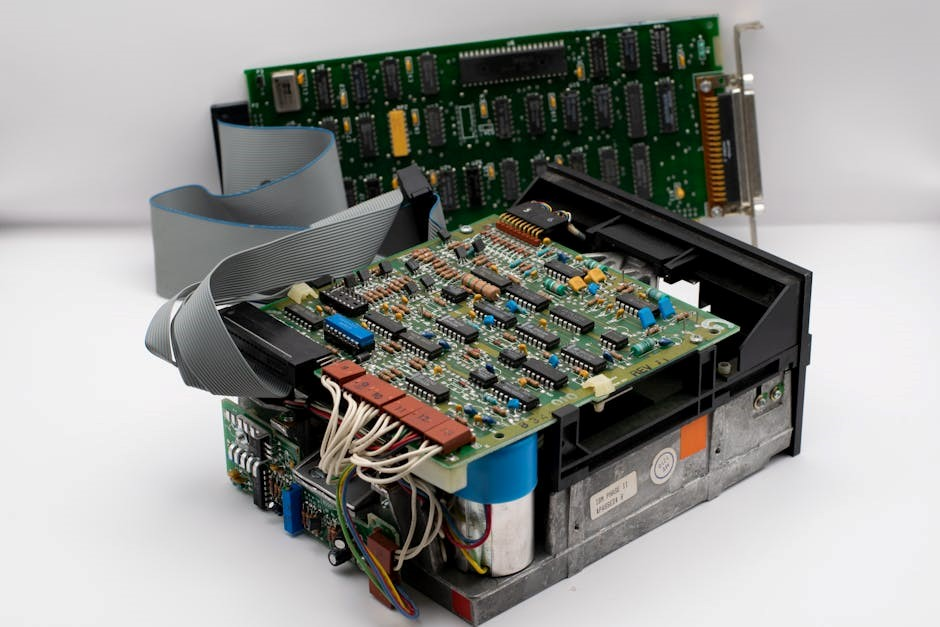
MIL-STD-1553 supports both broadcast and point-to-point communication modes, offering flexibility in network architecture. Broadcast messages are transmitted to all Remote Terminals (RTs) on the bus, while point-to-point messages are directed to a specific RT identified by its address. Condor Engineering’s tutorial clarifies the distinctions between these modes and their respective applications.
The choice between broadcast and point-to-point depends on the specific data exchange requirements. Broadcast is efficient for distributing common information, while point-to-point ensures data privacy and targeted control. The tutorial details how the Bus Controller manages these communication types, ensuring efficient and reliable data delivery. Mastering these concepts is crucial for designing effective MIL-STD-1553 systems.
Message Types: Commands, Data, and Status
MIL-STD-1553 defines three primary message types: Commands, Data, and Status. Commands instruct RTs to perform specific actions, while Data messages transfer information between the Bus Controller and RTs. Status messages report the operational state and health of RTs back to the controller. Condor Engineering’s tutorial provides a detailed breakdown of each message type’s structure and function.
Understanding these message types is fundamental to MIL-STD-1553 system design. The tutorial explains how each message is formatted, including the time delay and data word structure. Proper utilization of these message types ensures reliable and efficient communication within the network. This knowledge is essential for developers implementing and troubleshooting MIL-STD-1553 interfaces.

Implementing MIL-STD-1553 Systems
MIL-STD-1553 implementation requires careful hardware selection and HDL code development, as detailed in Condor Engineering’s tutorial, ensuring robust interfaces.
Hardware Considerations and Component Selection
Implementing MIL-STD-1553 demands meticulous hardware choices. Condor Engineering’s tutorial emphasizes selecting components capable of withstanding harsh aerospace environments. This includes considering robust connectors, appropriate cabling, and reliable transceiver chips. Dual redundant physical layers are crucial for fault tolerance, necessitating careful component sourcing.
Furthermore, the tutorial highlights the importance of impedance matching to maintain signal integrity. Selecting components supporting Safe & Secure (SnS) implementations is vital for cybersecurity. Consideration must be given to power supply requirements and isolation techniques. Proper component selection directly impacts system reliability and performance, aligning with the standard’s deterministic nature. Thorough evaluation and testing are paramount before integration.
HDL Code Development for MIL-STD-1553 Interfaces
Developing HDL code for MIL-STD-1553 interfaces requires a deep understanding of the protocol’s timing and data structures. Condor Engineering’s tutorial provides guidance on implementing the Manchester encoding scheme in VHDL or Verilog. Accurate timing control is essential for reliable communication, demanding precise HDL coding techniques.
The tutorial stresses the importance of modeling the bus controller, bus monitor, and remote terminal functionalities in HDL. Error detection and correction mechanisms should be integrated into the HDL design. Thorough simulation and verification are crucial to ensure compliance with the standard. Efficient HDL code optimizes resource utilization and performance, enabling robust and reliable MIL-STD-1553 implementations.
Software Implementation and Protocol Stack
Software implementation of a MIL-STD-1553 system involves creating a protocol stack that handles message encoding, decoding, and bus arbitration. Condor Engineering’s tutorial details the layers of this stack, from the physical layer to the application layer. Drivers and APIs are essential for interfacing with the hardware and accessing the bus.
The tutorial emphasizes the need for real-time operating system (RTOS) support to manage timing constraints and prioritize tasks. Software must handle error detection, data validation, and status reporting. A well-designed software stack ensures reliable communication and efficient data transfer within the MIL-STD-1553 network.
Advanced Features and Considerations
Condor Engineering’s tutorial explores MIL-STD-1553’s error correction, cybersecurity features like Safe & Secure (SnS), and its ongoing adaptability to new technologies.
Error Detection and Correction
MIL-STD-1553 incorporates robust error detection mechanisms to ensure data integrity within critical aerospace and defense applications. Condor Engineering’s tutorial details how the protocol utilizes parity checking within each data word transmitted across the bus. This parity bit allows receiving terminals to verify the accuracy of received data, identifying single-bit errors.
Beyond basic parity, the standard supports more advanced error detection schemes, and the tutorial likely covers these. Furthermore, while MIL-STD-1553 primarily focuses on detecting errors, higher-layer protocols built upon it often implement retransmission requests when errors are found, effectively providing a form of error correction. Understanding these layers is crucial for building reliable systems, as highlighted in the comprehensive resources offered by Condor Engineering.
Cybersecurity and Safe & Secure (SnS) Implementations
MIL-STD-1553 systems, originally designed without inherent cybersecurity features, now face increasing threats. Condor Engineering’s tutorial addresses the growing need for security enhancements, particularly with the introduction of the Safe & Secure (SnS) profile. This profile adds layers of protection against malicious attacks and unintentional data corruption.
SnS implementations, detailed in the tutorial, incorporate features like cryptographic authentication and data encryption to safeguard sensitive information transmitted over the bus. Furthermore, it provides mechanisms to detect and mitigate wire faults that could be exploited for malicious purposes. SITAL Technology is a key player in providing MIL-STD-1553 IP and components with integrated SnS capabilities, as covered within the tutorial’s resources.
Future Trends and Adaptability of MIL-STD-1553
MIL-STD-1553, despite its age, demonstrates remarkable adaptability, continually integrating new packaging technologies to remain relevant in modern aerospace and defense systems. Condor Engineering’s tutorial highlights this ongoing evolution, noting the protocol’s ability to accommodate advancements while maintaining its core deterministic characteristics.
The tutorial explores emerging trends, including increased bandwidth demands and the integration of MIL-STD-1553 with newer networking standards. The standard’s robustness and reliability ensure its continued use in critical applications. As defense systems evolve, MIL-STD-1553’s adaptability keeps it at the forefront, proving that even established technologies can thrive through continuous improvement and strategic integration, as detailed within the tutorial’s scope.